
Judicial Voter Guide 2026
Why Judicial Elections Matter to the Average Arkansan
Every day, Arkansas courts make decisions that touch your life, often in ways you don’t realize. From traffic tickets and landlord disputes to family matters like divorce and adoption, and even issues like your utility bills, state courts handle 95% of all legal cases in America. That means the judges you elect aren’t just deciding laws, they’re shaping your daily reality.
Judges are more than referees; they are the guardians of the Constitution, charged with protecting your rights and freedoms. And now, their role is bigger than ever since the U.S. Supreme Court has been sending more critical issues back to the states. This puts a lot of power in the hands of Arkansas Supreme Court and Court of Appeals justices. These justices serve eight-year terms. That means the person you vote for today will influence Arkansas law for nearly a decade.
That’s a long time to live with your choice, and even longer to wait if you want to change.
But it’s not just the appellate courts. Trial judges, both district and circuit, make decisions that can be difficult to overturn. Whether it’s a small claims case, a criminal charge, or a contract dispute involving a lot of money, if a jury is not involved, it’s a judge who will decide the outcome.
Your vote for judges matters more than most people realize.
These races rarely grab headlines, but they could have a direct and lasting impact on your life.
The guide below provides insights into the candidates in this year’s judicial races in Central Arkansas. The answers are in their own words. If a candidate chose not to participate in the voter guide, that is indicated below as well.
Read on to learn about this year’s judicial candidates, and when you’re finished reading the guide, make a pledge to show up and vote in these races on March 3, 2026.
Races with more than one candidate
AR Supreme Court - Position 3
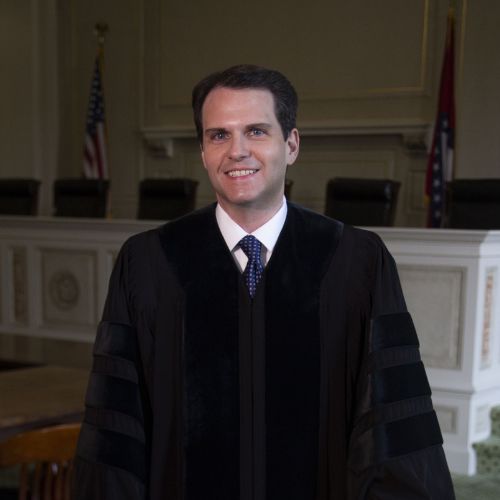
Justice Nicholas Bronni
Running for AR Supreme Court, Position 3
What led you to choose a career in law?
My grandfather inspired me to become a lawyer. He was a German immigrant, and he taught me the value of freedom. He came to America on the eve of the Second World War, and he became an American citizen. He loved this country, our Constitution, and the freedoms we enjoy. Because he left Germany on the eve of the Second World War, he also understood better than most that the rule of law matters. And he made sure that I understood that too. That’s why I became a lawyer. I wanted to defend the rule of law, our Constitution, and liberty. That’s also why I’ve spent much of my career in public service, protecting ordinary investors, fighting for small town pharmacies, and defending the Constitution–because those are the values he taught me. And it’s why I’m proud to serve on your supreme court.
What experience and attributes of yours make you believe you will be (or already are) a good judge?
Experience matters. I’ve been a judge, Arkansas’s top litigator, a law professor, and a law clerk. I know what it’s like to both argue and decide cases.
As a justice, I’ve decided cases on everything from constitutional to criminal law. I’ve simplified and clarified the law, so that you don’t need a lawyer to know your rights.
I was also your Solicitor General and won two US Supreme Court cases. I won a landmark victory for pharmacists, successfully defending our law protecting independent and rural pharmacies. And I led a bipartisan group of 32 states to victory in an abandoned property case, winning millions for taxpayers. And I’ve argued countless cases in state and federal court and written numerous Supreme Court briefs.
I clerked for a federal appeals court and worked at a large DC law firm. I was also a lawyer for the US Securities and Exchange Commission, where I fought to protect investors from fraudsters and swindlers. And I’ve taught law school.
What are your top two values in life that inform everything you do?
I’m a rural Arkansas kid and a father of two. Both animate everything I do.
I grew up in Camden, Arkansas, and I wouldn’t be where I am today if I hadn’t grown up there. Growing up in a small town taught me the value of hard work, the importance of community, and Arkansas values. No matter where I’ve been, I’ve carried those values with me. I put myself through college and law school–working and paying my own way–and I’ve spent most of my career in public service, seeking to give back to the community. I brought those values to the Arkansas Supreme Court.
I’m also a father. My daughter is 9, and my son is 6. They motivate everything I do. I’m committed to making the world a better place for them and ensuring they continue to enjoy the freedoms I’ve always enjoyed.
How would you describe the role of the judiciary in protecting our democratic republic?
As a supreme court justice, it’s my job to be honest and impartial. I decide the hard cases and ensure that everyone–including the government–plays by the rules. I don’t play favorites. I make decisions based on the law, not politics or personality.
I believe that our Constitution is an extraordinary document for an extraordinary country. I understand that courts play an important, but limited, role in our constitutional system. Judges aren’t legislators or social scientists, and I don’t pretend to be either. Politics is for the legislature.
It’s also my job to simplify the law and make it understandable. That’s why I write my decisions in plain English, not lawyer-speak. You should never be surprised by the law.
The Arkansas motto is Regnat Populus, or “The People Rule.” What does that phrase mean to you?
In Arkansas, the people are in charge. For judges, that means it’s not our role to thwart the will of the people. Instead, it’s our job to ensure everyone plays by the same rules–whether we agree with those rules or not.
Which one of the United States Supreme Court Justices most reflects your judicial philosophy? Why is this the case?
We reached out to this candidate’s campaign but haven’t received a response yet. If you work on their campaign and would like to participate, please reach out to us at info@indivisiblelrca.org.
Sixth Judicial Court - 3rd Division
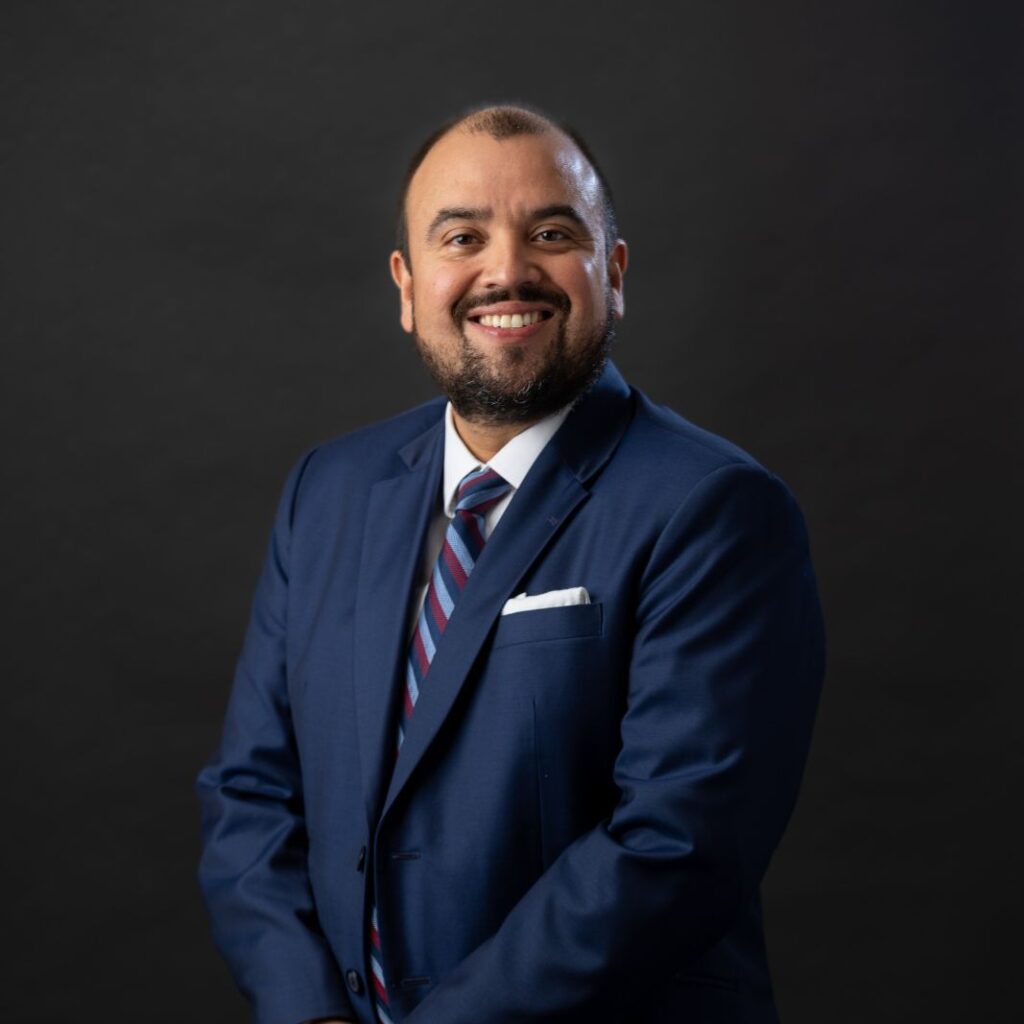
Robert Tellez
Running for 6th Judicial Court, 3rd division
What experience and attributes of yours make you believe you will be (or already are) a good judge?
I have been an Attorney for 18 years. I started in Commercial Real Estate with the Quattlebaum Grooms law firm. In 2009, I joined a friend in starting Monterrey & Tellez Law Firm and began working with the Spanish Speaking immigrant community. In 2015, I started Tellez Law Firm PLLC. I have been a small business owner since 2009. I know what is like to make payroll, lead a team, and make hard business decisions. My legal work has been varied, including family law, civil law, juvenile law, and criminal law. In my work, I have advocated and been in relationship with people all over the state from many different walks of life. I have represented people of color, low-income people, Spanish speaking immigrants, and those living in rural parts of our state. My goal is to treat others the way I would like to be treated. I have been married to my wife, Mary, for 20 years. We have a 14 year old daughter 12 year old son. I know the struggles of raising a family.
What are your top two values in life that inform everything you do?
Humility and Respect of others
How would you describe the role of the judiciary in protecting our democratic republic?
Judges are community care takers. They uphold the rule of law. At their best, they do this with humility, listening and caring for those in front of them. They treat people with respect whether they are self-represented or have any attorney. They are impartial, follow the law, and when the law allows discretion, they use that discretion compassionately based on the facts of each case.
The Arkansas motto is Regnat Populus, or “The People Rule.” What does that phrase mean to you?
It means the people have the power. If I become a Circuit Judge, it is not my Court. It is the people’s court. I am there to serve the people following the law and with integrity. I intend to do this with humility, accessibility, respect, and kindness. The people should hold elected officials accountable, including with their voting power.
Which one of the United States Supreme Court Justices most reflects your judicial philosophy? Why is this the case?
I believe we can learn from each Justice. My goal as a trial Judge will be to be impartial and treat all people with respect. That includes being responsive, listening, and ruling justly. It means caring for people and the rule of law.
How will you balance being an independent judge and an elected official?
It is important to me that under Arkansas law, Judges are non-partisan. We must follow the law. To follow the law, we must be impartial and treat all people with respect regardless of their position in life. I will follow the judicial ethics rules to the best of my ability including being non-partisan and transparent with the public.
Tell us about a time when there were no good options regarding a court case. How did you navigate that situation?
The attorney client relationship is sacred. We must understand the facts of the case and the history of the Client. I used this information to negotiate a fair resolution of the case with opposing counsel. The key was treating opposing counsel with respect and being honest with them. Treating them the way I would like to be treated.
Are you a member of any civic, educational, or charitable organizations? If so, which one(s) and what motivated you to choose to work with them?
I am a former Board Member of the First Tee of Central Arkansas. Golf is a game which mimics life in so many ways. This includes honesty, perseverance, and sportsmanship which includes learning how to win or lose with honor. I love the work of the First Tee with our youth from all parts of central Arkansas. I’m also on the Executive Committee of the North Little Rock Chamber of Commerce. That work is important because part of our dignity comes from a job, from a way to provide for our families. I support the Chamber because of the work it does to promote dignity through a job and for the educational outreach it does for North Little Rock schools.
What are the three most important areas where the administration of justice can be improved in district courts, and what improvements do you plan to make if elected? If already elected, what progress have you made toward these goals?
District Court is where your average Arkansan will have contact with the Courts. It is important that the Court is flexible with people because they have jobs and have to provide for their families. Also, court is intimidating. District Courts must continue to spread legal information and resources to the community it serves. It is a guardian of the rule of law and justice for a large number of Arkansans. This includes continuing to provide resources and support to those whom English is a second language.
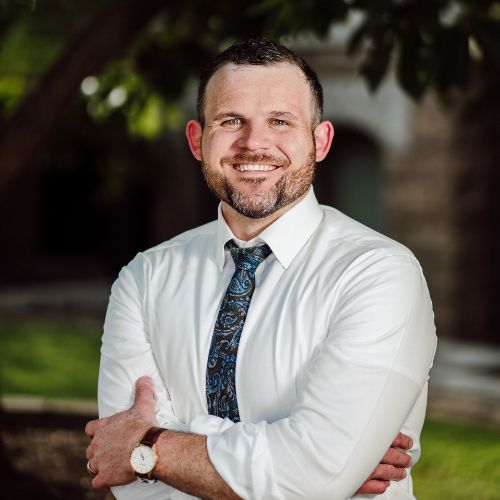
Jacob I. Wickliffe
Running for 6th Judicial Court, 3rd division
What experience and attributes of yours make you believe you will be (or already are) a good judge?
I am a family lawyer running to be your next Family Law Judge, and I bring the experience that truly matters—because I live it every day. I am uniquely qualified to be your next Family Law Judge because I have experience on both sides of the bench. After law school, I served as a law clerk for a respected Family Law Judge, gaining firsthand insight into how justice works from behind the bench. Today, I use that knowledge in the courtroom as a trial lawyer and ad litem with Dodds, Kidd & Ryan, representing families and the best interests of children with skill, grit, & compassion. I understand the weight of every decision a Family Law Judge makes—because every case involves what matters most to each family in the courtroom. True justice requires a judge to see you, hear you, treat you with dignity, and protect what matters most while upholding the rule of law—and I have the family law experience to do just that. There will be no learning curve. I will be ready on day one to serve you.
What are your top two values in life that inform everything you do?
Grit is the foundation of who I am. I was born and raised in Levy of North Little Rock, and things were not always easy growing up, but this gave me grit. My parents taught me the meaning of working hard, doing the right thing when no one is watching, standing firm when things get tough, and never giving up on people—especially when they need help most. This shaped me into the person I am today, and that grit drives me to stand up for families, advocate for children, and protect what matters most to Arkansans in family court.
Compassion shapes how I approach people and every case. Family law matters are often the most painful moments in people’s lives—divorce, custody battles, decisions about children’s futures. Compassion means I listen with care, treat everyone with dignity, and recognize the profound impact each decision has on real people, real lives.
Together, these values reflect who I am—a genuine person trying to do some good for his community.
How would you describe the role of the judiciary in protecting our democratic republic?
The judiciary plays an essential role in protecting our democratic republic, and that role is fundamentally about ensuring fairness, upholding the rule of law, and protecting Arkansans—protecting you. In family court, this principle is vital. The people of Pulaski and Perry Counties are entrusting a judge to make decisions about their lives, their homes, their children, and their futures. The judiciary must ensure this trust is not broken, and as your next Family Law Judge, I will treat every person with respect and ensure our courtroom is a place where justice protects what matters most to every person that walks through the doors while upholding the rule of law.
The Arkansas motto is Regnat Populus, or “The People Rule.” What does that phrase mean to you?
“Regnat Populus”—”The People Rule”—is a powerful reminder that it all starts and ends with the people—with you. It means that those who serve in public office, including judges, are servants of the people—accountable to you and entrusted with the responsibility to protect what matters most to you. As a Family Law Judge, “The People Rule” means that every person that walks in a courtroom deserves a judge who sees them, who listens to them, who treats them with dignity, and who protects what most to them while upholding the rule of law. Protecting the people with the laws established by the people.
How will you balance being an independent judge and an elected official?
The judiciary is unique in that it is an elected position, but a judge also takes an oath to uphold the rule of law. This means as your Family Law Judge, I will be accountable to the people of Pulaski and Perry Counties, and I must also interpret and apply the rule of law. To remain accountable to the people, I believe judge must be approachable. As your Family Law Judge, I will remain connected to the community I serve. The judicial system can be intimidating, but judges shouldn’t be viewed that way. They should maintain a presence in the community, so people know that judges are just people fighting to protect them. When people see judges at community events or volunteering alongside them, it breaks down barriers and builds trust in our judicial system. You deserve a judge who is both accessible and independent, and that’s exactly what I’ll be.
Tell us about a time when there were no good options regarding a court case. How did you navigate that situation?
As an ad litem, I’m appointed by the court to represent the best interests of children—the innocent ones caught in the middle. This requires working with families going through some of the hardest parts of their lives. These are often the toughest cases: parents struggling with addiction, mental health issues, criminal charges, or other serious challenges. I’ve faced cases where there were no good options—removing a child or leaving the child in an unsafe environment. What I learned is that in family law, “no good options” doesn’t mean “no path forward.” It means we have to work harder to find solutions, connect families with resources, and give people a real chance to heal so they can take care of their child. In these cases, we worked with programs and created plans that protected children while giving parents the support needed to recover. It wasn’t easy, and it wasn’t perfect, but it gave families a fighting chance.
What are the three most important areas where the administration of justice can be improved in district courts, and what improvements do you plan to make if elected? If already elected, what progress have you made toward these goals?
1. Mental Health. A great deal of family law cases stem from mental health, addiction, and similar struggles. Arkansas has tremendous resources available, but not every court utilizes them effectively. I will work to build a comprehensive guide and network of resources to help families facing these challenges.
2. Access. We must improve access to the Court and information. I will be committed to transparency by providing information about court systems and procedures in accessible formats—whether online, through social media, or via mail for those without internet access.
3. Affordability. Going to court is expensive, and that burden falls hardest on families going through divorce when household incomes are being divided. I will use my family law experience to mitigate this cost and burden by reducing the unnecessary hoops that some courts require, such as conferences, drafting every order, and aspects of scheduling orders that have no business in family court.

Jesse Gibson
Running for 6th Judicial Court, 3rd division
What experience and attributes of yours make you believe you will be (or already are) a good judge?
I have been a practicing attorney for almost 27 years, which is more than my primary opponents combined. I’ve served the legal community in leadership capacities as the President of the Arkansas Trial Lawyer’s Association and as a Trustee of the Arkansas Bar Association. I’ve also served my local community as Chair of the Little Rock Parks and Recreation Commission. I’ve done a wide and varied practice, handling cases ranging from simple traffic tickets to complex medical malpractice and catastrophic injury cases. I want to put that experience to work for Pulaski and Perry Counties.
What are your top two values in life that inform everything you do?
Faith and Honesty. My faith is very important to me. I’ve served as an usher in my church, Pulaski Heights United Methodist Church, for many years. My family has also helped establish hunger missions at our church. Honesty and reputation are literally the only currency you have as a practicing attorney. I have thoughtfully and intentionally cultivated mine as someone opposing attorneys can trust and that my word is gold.
How would you describe the role of the judiciary in protecting our democratic republic?
The justice system is the great equalizer in our society. Blind Lady Justice epitomizes that, in tha Justice does not care who you are, what you have, or the influence you wield. All are looked at through the same lens, which is key to protecting our values as Americans.
The Arkansas motto is Regnat Populus, or “The People Rule.” What does that phrase mean to you?
Very similar to a jury. 12 people use their voices to find the truth and mete out justice. The people indeed both seek and do justice, which is almost by definition “Regnat Populus.”
Which one of the United States Supreme Court Justices most reflects your judicial philosophy? Why is this the case?
I would say Justice Sotomayor, who has always shown that while adherence to the written rule of law is paramount, empathetic application of the law is necessary.
How will you balance being an independent judge and an elected official?
Electing versus appointing judges has long been debated. I think the best way to walk the line between being an independent judge and an elected official is to always recognize your fidelity to process. Allowing people to be heard and treated with respect. Forever seeking to do what is right. If you can remember to do those, both independence and duty to voters can be accomplished.
Tell us about a time when there were no good options regarding a court case. How did you navigate that situation?
I had a catastrophic injury case once that I knew would be nearly impossible to win. But I felt like my client and his family were right, so I soldiered on. While we did lose, it meant the world to my clients that I cared enough to see it through. I was reminded of Atticus Finch’s statement about courage in “To Kill a Mockingbird” and how when someone keeps going when you know you’re licked is the sign of true courage.
Are you a member of any civic, educational, or charitable organizations? If so, which one(s) and what motivated you to choose to work with them?
My family has set up several hunger missions in our church where we raise money to pay for holiday food packages and meals. I can’t take full credit. My kids would see folks asking for change on the side of the road and wondered aloud how we could help them so we found a way!
What are the three most important areas where the administration of justice can be improved in district courts, and what improvements do you plan to make if elected? If already elected, what progress have you made toward these goals?
Keeping a streamlined docket. Allowing everyone to be heard and have their day in court. And access to the courts for all.
Sixth Judicial Court - 11th Division
Judge Patricia "Patti" James
Running for 6th Judicial Court, 11th division
What experience and attributes of yours make you believe you will be (or already are) a good judge?
Since 2012, I have worked every day as a Circuit Judge to apply the law consistently, treat everyone with dignity, and run a courtroom that is prepared and efficient.
I began with a juvenile docket and later expanded my work to Veterans Treatment Court and Drug Treatment Court. I have presided over civil litigation cases since 2020. When I assumed that docket, more than 2,000 cases were pending. In my first 18 months, I closed more than 1,300 cases—because timely access to justice matters, and litigants deserve to be heard without unnecessary delay.
The attributes I bring to the bench are steady judgment, patience, and a strong work ethic. I prepare. I listen. I treat people respectfully and work to ensure every litigant receives a fair, timely, and lawful decision. That is why I believe I am, and will continue to be, a good judge.
What are your top two values in life that inform everything you do?
Service and integrity.
I have spent much of my career serving the public as a judge. I’ve focused a lot of my time, both on the bench and as a lawyer before that, on families and our youth. I also work hard to serve our veterans and people working to rebuild their lives through Veterans Treatment Court and Drug Treatment Court.
As the famous C.S. Lewis quote says, “Integrity means doing the right thing when no one is watching.” As a judge, I believe that means being fair, following the law, treating every person with dignity, and making decisions based on the facts and the record.
How would you describe the role of the judiciary in protecting our democratic republic?
The judiciary is an important part of our system of checks and balances. Courts don’t make policy, but they do interpret and apply the Constitution and laws, and they ensure that government officials stay within their legal authority. This is especially important for protecting individual rights and for people who may not have power or influence.
The courts also support democracy by giving people a fair and peaceful way to resolve disputes. When people feel heard, treated with respect, and given a thoughtful decision based on the law, they are more likely to accept the outcome even if it isn’t what they hoped for. That trust helps keep our society stable.
The Arkansas motto is Regnat Populus, or “The People Rule.” What does that phrase mean to you?
Regnat Populus, or “The People Rule,” means the government exists to serve the public. Regarding the court system, I believe it means that the courts protect the public’s right to a system where the law is applied fairly for all regardless of political belief, public opinion, or power.
It serves as a reminder that, as a judge, I am a public servant. My job is to uphold the Constitution, apply the law consistently, and ensure an impartial and timely decision for every person that comes before my court.
Which one of the United States Supreme Court Justices most reflects your judicial philosophy? Why is this the case?
I don’t know that my philosophy completely aligns with any one particular Justice. There are things that I admire about the approaches taken by many Justices that have served on the United States Supreme Court, both current and former, although I may have not always agreed with decisions they reached.
For example, I admired Justice Ruth Bader Ginsburg’s careful preparation, hard work, and deep respect for equal dignity under that law. On the other hand, I admired Justice Antonin Scalia for his insistence that judges keep personal policy preferences out of legal interpretation.
Each of those things are reflected in my own philosophy: be thoroughly prepared, follow the law, decide each case on the record before me, and treat every person who comes to court with dignity and respect.
How will you balance being an independent judge and an elected official?
I listen to the public and remain accountable for how I serve, but I remain independent in how I rule. I believe I am accountable to the voters for my integrity, work ethic, and the way I run my courtroom. The public has every right to expect that I will treat people with dignity, manage the docket responsibly, and make timely decisions based upon the law and the record.
What the public cannot expect is that I will decide cases based on public pressure, donations, politics, or headlines.
Tell us about a time when there were no good options regarding a court case. How did you navigate that situation?
Judicial ethics rules prevent me from discussing any specific case. In every case, someone will be unhappy with the outcome. My responsibility is to review the law and the facts carefully and make the decision that is legally correct and as fair as possible.
Are you a member of any civic, educational, or charitable organizations? If so, which one(s) and what motivated you to choose to work with them?
Judges must stay impartial and avoid even the appearance of bias. That’s why I limit memberships that could raise questions about fairness or create conflicts, and I avoid groups that take positions on issues that may come before the court. My goal is to stay connected to the community while protecting the integrity of the bench.
I do maintain membership in professional organizations because I find they provide excellent opportunities for continuing legal education and help me stay up to date on changes in the law. I am a member of the Pulaski County Bar Association, where I served as president from 2009 to 2010. I am also a member of the Arkansas Bar Association, Judge Henry Woods Inn of Court, and previous member of the Junior League of Little Rock.
What are the three most important areas where the administration of justice can be improved in district courts, and what improvements do you plan to make if elected? If already elected, what progress have you made toward these goals?
I believe the most important ways to improve justice are resolving cases on time, making sure everyone can access the courts, and being consistent and professional so people can trust the system. People in circuit court deserve clear expectations, efficient scheduling, and decisions based on the law and facts.
As judge, I have already worked to improve these areas by using scheduling to move cases forward without unnecessary delays, and I will continue to make the docket more efficient.
A fair court should be clear and easy to understand. I will continue to make expectations clear, give practical guidance about procedures, and issue clear orders to avoid confusion and prevent repeat hearings.
Finally, I will continue to expect professionalism and readiness from everyone in the courtroom and make sure each person is treated equally, no matter who they are or what resources they have. The court’s job is to apply the law, protect rights, and treat every person with dignity.
We reached out to this candidate’s campaign but haven’t received a response yet. If you work on their campaign and would like to participate, please reach out to us at info@indivisiblelrca.org.
Races with a single candidate
AR Supreme Court - Position 6
We reached out to this candidate’s campaign but haven’t received a response yet. If you work on their campaign and would like to participate, please reach out to us at info@indivisiblelrca.org.
Sixth Judicial Court - 2nd Division
We reached out to this candidate’s campaign but haven’t received a response yet. If you work on their campaign and would like to participate, please reach out to us at info@indivisiblelrca.org.
Sixth Judicial Court - 4th Division
We reached out to this candidate’s campaign but haven’t received a response yet. If you work on their campaign and would like to participate, please reach out to us at info@indivisiblelrca.org.
Sixth Judicial Court - 6th Division
We reached out to this candidate’s campaign but haven’t received a response yet. If you work on their campaign and would like to participate, please reach out to us at info@indivisiblelrca.org.
Sixth Judicial Court - 7th Division
We reached out to this candidate’s campaign but haven’t received a response yet. If you work on their campaign and would like to participate, please reach out to us at info@indivisiblelrca.org.
Sixth Judicial Court - 8th Division
We reached out to this candidate’s campaign but haven’t received a response yet. If you work on their campaign and would like to participate, please reach out to us at info@indivisiblelrca.org.
Sixth Judicial Court - 10th Division
We reached out to this candidate’s campaign but haven’t received a response yet. If you work on their campaign and would like to participate, please reach out to us at info@indivisiblelrca.org.
Sixth Judicial Court - 13th Division
We reached out to this candidate’s campaign but haven’t received a response yet. If you work on their campaign and would like to participate, please reach out to us at info@indivisiblelrca.org.
Sixth Judicial Court - 14th Division
We reached out to this candidate’s campaign but haven’t received a response yet. If you work on their campaign and would like to participate, please reach out to us at info@indivisiblelrca.org.
Sixth Judicial Court - 15th Division
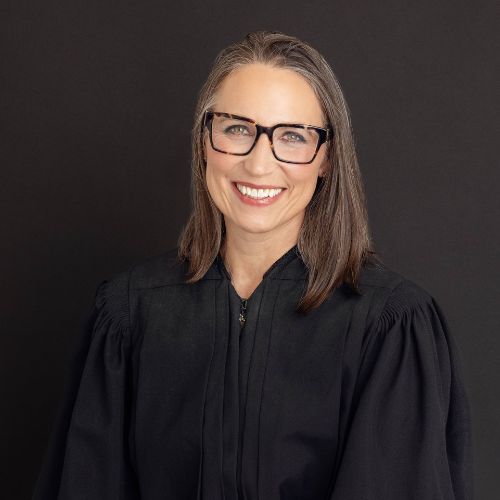
Judge Amy Moore
Running for 6th Judicial Court, 15th division
What experience and attributes of yours make you believe you will be (or already are) a good judge?
I do my best to try to understand where everyone is coming from, recognizing that my lived experiences may be very different from the experiences of people who come to court. I try to make the process understandable to people who are representing themselves, both in court and in interactions with my staff. I listen carefully, ask questions, and take notes. I approach my work with humility, recognizing that my ultimate job is to do justice and to get it right, even if it means acknowledging a mistake or reconsidering a decision that I’ve gotten wrong.
What are your top two values in life that inform everything you do?
The two values that I hold highest in life are justice and mercy.
How would you describe the role of the judiciary in protecting our democratic republic?
An independent judiciary is essential for ensuring a stable balance of power within the government, serving as a check on the powers of the legislative and executive branches. It does this first and foremost by ensuring that individual liberties and rights guaranteed by our state and federal constitutions are upheld; by interpreting legislation and administrative regulations in situations where there is ambiguity or conflict; and by fairly resolving legal disputes that are grounded in law and precedent.
The Arkansas motto is Regnat Populus, or “The People Rule.” What does that phrase mean to you?
I believe this means that everyone in Arkansas deserves a voice in our political process, and that we should always strive to ensure that those voices are fairly represented by those who hold public office.
Which one of the United States Supreme Court Justices most reflects your judicial philosophy? Why is this the case?
I am deeply concerned that our current Supreme Court has become so politicized that identification with a specific justice would be the functional equivalent of stating a partisan alignment. Because such alignment is antithetical to an independent judiciary, I prefer not to answer.
How will you balance being an independent judge and an elected official?
I take my responsibilities as a judge very seriously. Because I am bound by rules of judicial ethics to dutifully adhere to the law without partisan influence or personal bias, I place independence above all in balancing considerations that may conflict. As an elected official, I am subject to electoral accountability–which I wholeheartedly embrace. However, this accountability also subjects judges to pressure when controversial issues come before the court. In those situations, judges are often compelled to choose between making a legally sound but politically unpopular decision, in which case they risk electoral consequences or even inappropriate pressure from other branches of government. I am committed to upholding the independence of the judiciary and the rule of law, notwithstanding any political or personal consequences.
Tell us about a time when there were no good options regarding a court case. How did you navigate that situation?
I had a custody case last year where the father had a history of domestic violence and where the mother had a history of methamphetamine use. Both parents had subjected their child to significant trauma. After considering the recommendations of the child’s attorney ad litem, I placed that child with the parent who was most willing and able to participate in therapeutic family interventions and provided a path for the non-custodial parent to regain meaningful parenting time with the child.
Unfortunately, this is a common scenario. These cases are made especially difficult given the relative lack of free and low-cost mental health services for families struggling with domestic violence, substance abuse, and trauma. In these situations, I typically appoint an attorney ad litem to represent the minor child. I rely on the ad litem to evaluate each parent’s and each child’s circumstances; gather input on how best to address the child’s needs; and recommend a viable, supported path forward.
Are you a member of any civic, educational, or charitable organizations? If so, which one(s) and what motivated you to choose to work with them?
Yes. I am currently a member of the Arkansas Access to Justice Foundation board, the Arkansas Bar Foundation board, and the American Bar Association’s Commission on IOLTA. I have also served on the boards of numerous state and national organizations that work to improve access to justice and access to healthcare for all. I am involved in these specific organizations because I am committed to working to improve access to justice, health equity, funding for legal aid, and the administration of justice.
What are the three most important areas where the administration of justice can be improved in district courts, and what improvements do you plan to make if elected? If already elected, what progress have you made toward these goals?
I am running for a circuit judge position, so this question is not applicable to my race.